
Cross-border freight: the documents, the crossings, the timing.
Most cross-border delays are not trucking problems. They are paperwork problems discovered at the wrong moment. Here is how to avoid that.
How a move into Mexico actually works
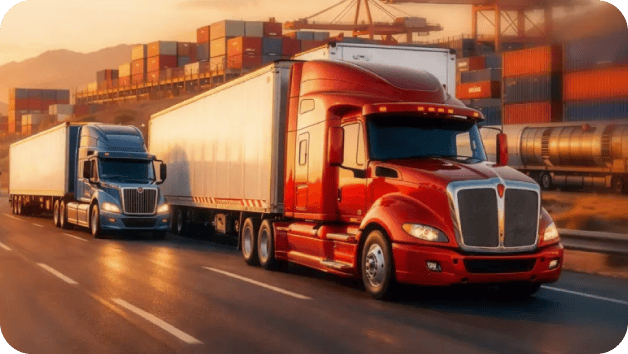
Southbound, the standard structure is three carriers and two customs filings on one load. A US carrier picks up and runs to the border city, usually Laredo. A transfer carrier, a drayage operator licensed to cross, shuttles the trailer over the bridge. A licensed customs broker files the entry on each side, and Mexican customs may select the load for inspection. A Mexican carrier then runs it from the border to the final destination.
Every handoff is a place it can stall. Northbound into Canada is generally simpler, because many carriers run a through trailer with no transfer, but the customs entry still has to be arranged before the truck reaches the crossing rather than after.
Southbound to Mexico
What travels with the load
Commercial invoice with description, value and terms of sale. Packing list. Bill of lading. Certificate of origin where a trade agreement applies. The pedimento, which is the Mexican customs entry, filed by a licensed customs broker. A carta porte complement for the Mexican leg. And an HS classification for each item.
Northbound to Canada
A shorter list, same discipline
Commercial invoice. Bill of lading. Certificate of origin where applicable. The customs entry filed before arrival. And a Canada Customs Invoice where it is required.
The rule that prevents most delays
Everything has to match
The description, the quantity and the value must be identical across every document. A packing list that says 240 cartons against an invoice that says 24 will hold the load, and correcting it at the bridge costs a day.
The crossings, compared
Which one you use changes the transit, the capacity available and how predictable the day is.
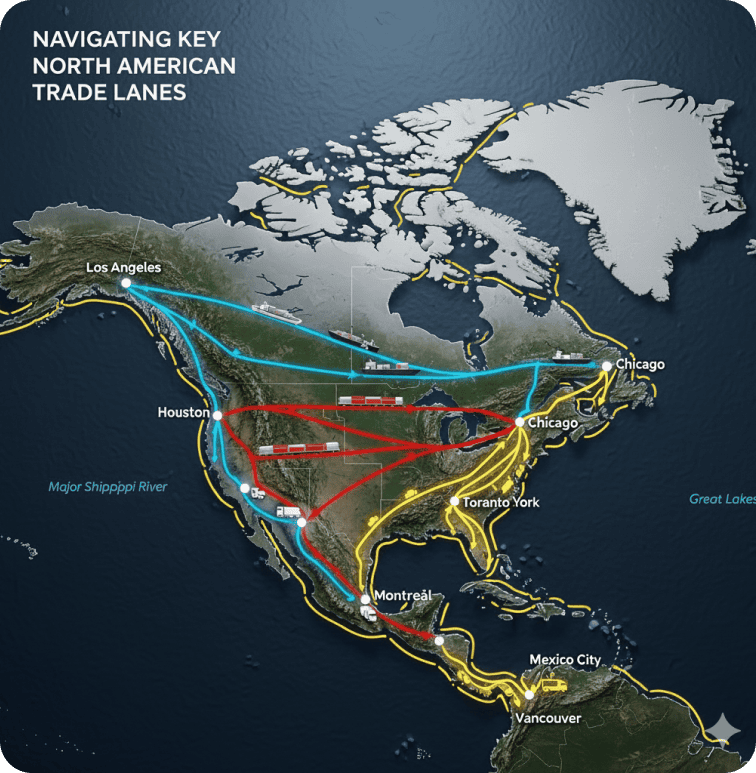
- Laredo, TX (Mexico). Busiest by a wide margin, and good for almost everything. Deepest carrier, transfer and broker capacity.
- El Paso, TX (Mexico). Serves Juarez manufacturing. Strong for maquiladora freight.
- Otay Mesa, CA (Mexico). The Tijuana corridor. Baja, and produce northbound.
- Nogales, AZ (Mexico). Heavy seasonal produce volume.
- Detroit, MI (Canada). Ambassador Bridge. The automotive corridor into Ontario.
- Port Huron, MI (Canada). Blue Water Bridge. The alternate when Detroit backs up.
- Buffalo, NY (Canada). Peace Bridge. Eastern Canada.
Busiest is not slowest. Laredo handles enormous volume but has the deepest supporting infrastructure, which usually makes it the most predictable crossing even when it is congested.

What actually causes delays
In rough order of frequency:
- Document mismatches. The most common cause by a distance, and the most preventable.
- Customs inspection selection. Sometimes random, sometimes triggered by the commodity or the importer history.
- Transfer carrier availability. Not enough shuttles at the bridge during a peak.
- Bridge congestion. Time of day matters more than people expect.
- Holidays, on both sides. Mexican and Canadian holidays, not just US ones. A truck that reaches the bridge on a Mexican holiday sits, and this catches US shippers constantly.
- Missing or incorrect HS classification.
- Duty or fees not arranged in advance.
How much time to build in: add a day for the crossing, and two when volume is heavy or the paperwork is new.
FAQ
Cross-border questions
The four that come up most.

How long does a border crossing add to transit?
Plan on one extra day, and two when volume is heavy or the documentation is new. The most common causes of delay are document mismatches, customs inspection selection, transfer carrier availability, and holidays, including Mexican and Canadian holidays, which US shippers routinely overlook.
What documents do I need to ship to Mexico?
A commercial invoice, packing list, bill of lading, certificate of origin where a trade agreement applies, the pedimento filed by a licensed customs broker, a carta porte complement for the Mexican leg, and an HS classification for each item. Descriptions and values must match across all of them.
What is the busiest US-Mexico border crossing?
Laredo, Texas, by a wide margin. It also has the deepest supporting infrastructure, meaning US carriers, transfer operators and customs brokers, which usually makes it the most predictable crossing even at high volume.
Do I need a Mexican carrier for freight into Mexico?
Usually yes. The common structure is a US carrier to the border, a transfer carrier across the bridge, and a Mexican carrier to the destination. Some through-trailer arrangements exist, but the three-leg model is standard. TransJet arranges and manages the freight across all three legs; the customs entries are filed by a licensed customs broker, which is a separate license.